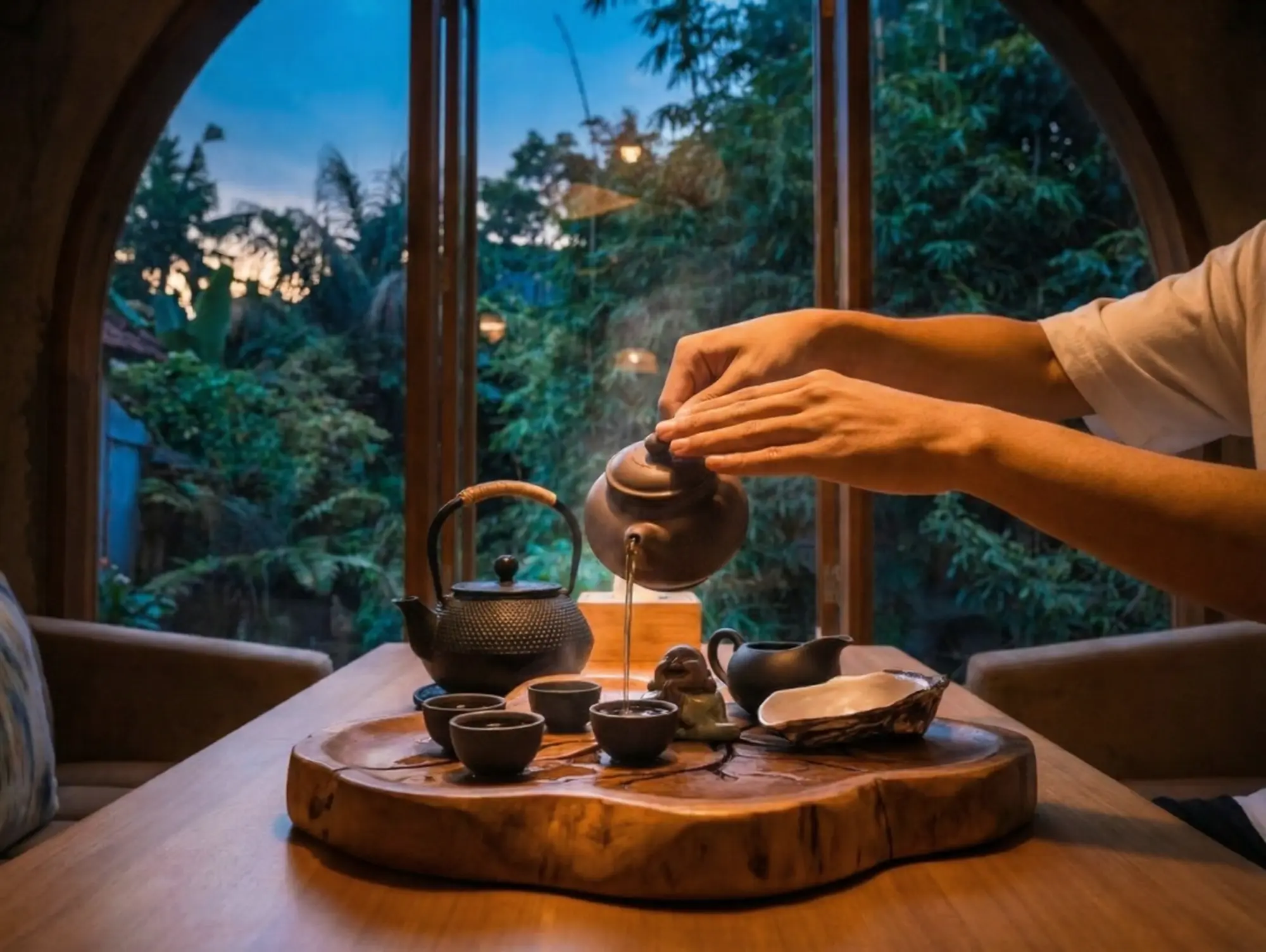
Bali is full of cafés, but genuine tea houses remain rare. For travellers searching for the best tea house in Bali, the search usually ends at a handful of places that treat tea as a craft rather than a menu item. This guide explains what makes a tea house authentic, walks through Chinese tea culture, and highlights where in Bali that experience can be found.
From delicate white teas to deeply aged Pu'er, each variety carries its own history, flavour, and ritual. Understanding these fundamentals makes it easier to recognise real expertise — and to enjoy every cup that follows.
Why Tea Houses Are Becoming Popular in Bali
Bali's travel identity has shifted toward slower, more intentional experiences. Yoga retreats, wellness resorts, and mindful dining have reshaped how visitors spend their time, and Chinese tea culture fits naturally into that shift. A quiet cup of tea offers the same sense of pause that meditation or a spa treatment provides, without needing a booking.
Digital nomads and long-stay travellers have driven demand further. Remote workers look for calm spaces between tasks, and a tea house provides exactly that: a seat, a steady rhythm, and no pressure to rush. As Bali's wellness tourism scene matures, more visitors are actively seeking out the best tea house in Bali rather than settling for tea as an afterthought on a café menu.
What Makes a Great Tea House
Not every venue serving tea qualifies as a tea house. A few things separate the two.
- Sourcing — genuine tea houses work with identifiable origins and harvests, not generic blends.
- Brewing knowledge — correct water temperature, steeping time, and equipment for each tea type.
- Atmosphere — a setting built for unhurried drinking, not a quick stop between errands.
- Expertise — staff who can explain a tea's character, not just its name.
These four qualities are what separate an authentic tea house from a café that happens to have tea on the menu — and exactly what to look for when searching for the best tea house in Bali.
Chinese Tea Culture Explained
Chinese tea culture stretches back thousands of years and remains deeply tied to hospitality, mindfulness, and social ritual. Sharing tea is traditionally treated as an act of respect, whether between old friends or new acquaintances.
At the centre of the culture is the tea ceremony, a structured method of brewing using tools such as a gaiwan (a lidded brewing bowl), a tea board, and a tea strainer. Some ceremonies also feature a tea pet — a small clay figure said to absorb the tea's essence over years of use.
Rather than rushing through a single cup, the ceremony encourages multiple short infusions of the same leaves, allowing the tea's character to shift and develop with each pour. It is this attention to detail — not the tea alone — that defines Chinese tea culture.
Different Types of Chinese Tea
Chinese tea is generally grouped by oxidation level, the process that shapes colour, aroma, and strength.
- Green tea — minimally oxidised, fresh and grassy
- White tea — lightly processed, delicate and naturally sweet
- Black tea — fully oxidised, bold and full-bodied
- Oolong tea — partially oxidised, ranging from floral to roasted
- Pu'er tea — fermented or aged, earthy and smooth
Each category behaves differently in the cup, and understanding this spectrum makes it far easier to choose a tea suited to the moment — whether that is a light morning infusion or a rich tea to close out a meal.
Tea Ceremony Experience
A traditional tea ceremony typically takes between 20 and 45 minutes, depending on how many infusions are poured. Rather than a performance to watch, it is designed as a shared, interactive experience — guests are usually invited to smell the dry leaves, watch the first infusion, and taste how the flavour changes across subsequent pours.
No prior knowledge is required. A tea master usually guides the session, explaining each step as it happens, which makes the ceremony approachable for complete beginners as much as for seasoned tea drinkers. Every Eden Hookah Club venue offers this full ceremonial experience, prepared by a dedicated tea master using traditional equipment over an open fire — a rare offering to find consistently across multiple locations in one city, let alone four.
Chinese Tea Ceremony Equipment: The Tools Behind Every Pour
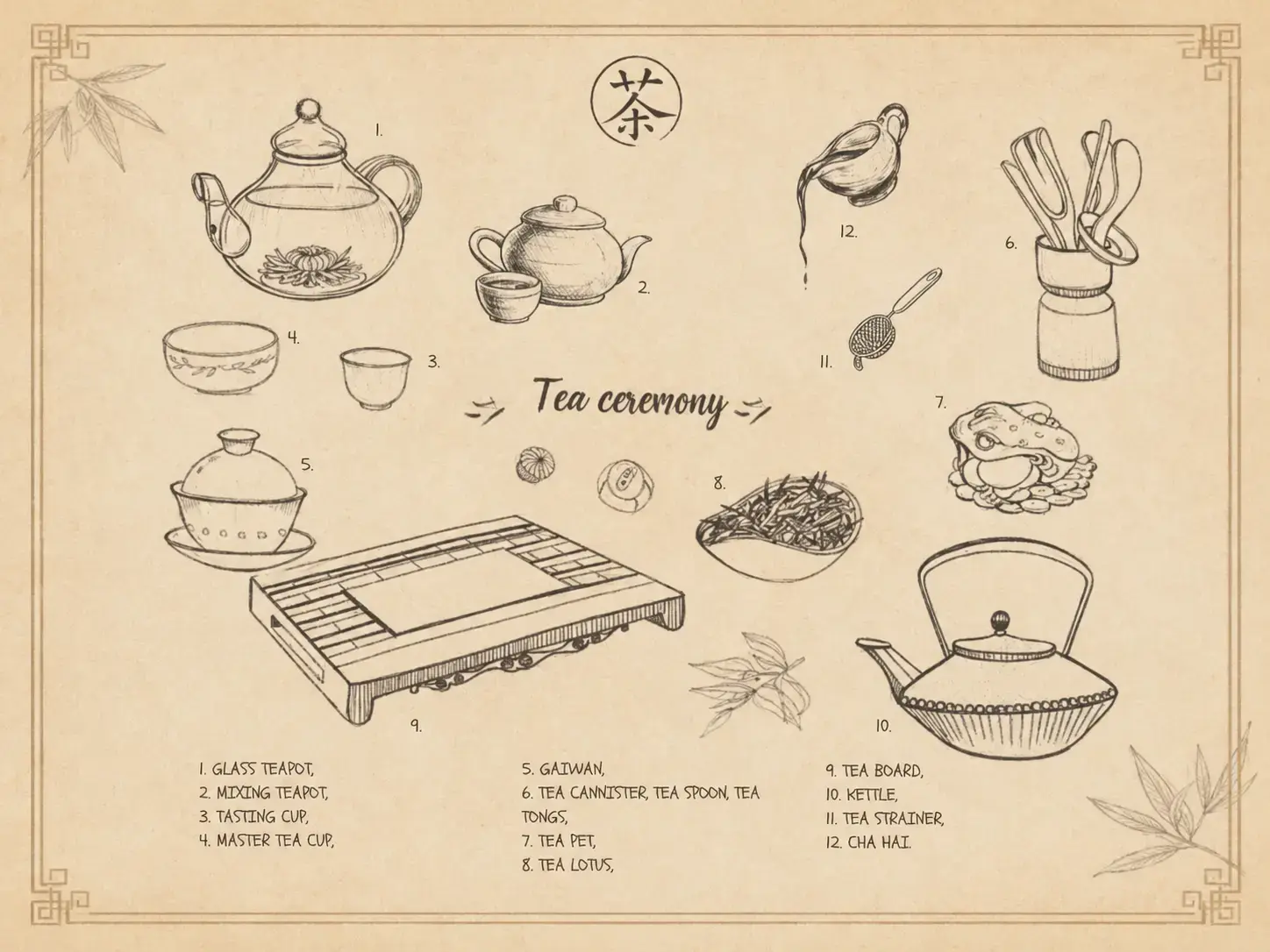
A Chinese tea ceremony relies on far more than tea leaves and hot water. Every vessel and utensil plays a specific role, refined over centuries into a set of specialised tools — together, they turn a simple pour into a small ritual of craft.
- Glass Teapot — used mainly for brewing delicate or flowering teas, where watching the leaves unfurl in hot water is as much a part of the experience as the tea itself.
- Mixing Teapot — a small clay or ceramic pot used for the actual steeping, holding the leaves through each infusion before the tea is poured out.
- Tasting Cup — a small cup reserved for evaluating a tea's colour, aroma, and flavour, sip by sip, infusion by infusion.
- Master Tea Cup — a slightly larger cup used by the tea master, who pours and serves throughout the ceremony.
- Gaiwan — a lidded brewing bowl and one of the most iconic tools in Chinese tea culture, with the lid tilted slightly to strain leaves while pouring.
- Tea Canister, Tea Spoon & Tea Tongs — a canister to store dry leaves, a spoon to measure them, and tongs to handle hot cups without touching them directly.
- Tea Pet — a small clay figure guests pour tea over during the ceremony; over years of use, it is said to absorb the tea's essence and develop its own patina.
- Tea Lotus — a decorative arrangement of tightly bound tea leaves that blooms into a lotus shape when steeped, often used as a visual centrepiece rather than for drinking.
- Tea Board — the tray the entire ceremony is performed on, designed to drain excess water away as tea is poured, rinsed, and refilled.
- Kettle — used to heat water to the precise temperature each tea requires, a detail that changes significantly between green, white, and dark teas.
- Tea Strainer — a fine mesh strainer placed over a cup or pitcher to catch stray leaf fragments while pouring.
- Cha Hai (Fair Cup) — a pitcher that receives tea from the gaiwan or teapot before serving, evening out the strength of the brew so every cup poured from it tastes the same.
Understanding what each tool does makes the ceremony easier to follow — and easier to appreciate the next time a tea master reaches for one mid-pour, the same craftsmanship that sets the best tea house in Bali apart from an ordinary café.
Where Can I Find a Best Tea House in Bali ?
Eden Hookah Club has built a reputation across Seminyak, Canggu, Ubud, and Uluwatu for pairing hookah culture with a serious, well-sourced Chinese tea programme. Measured against the criteria above — sourcing, brewing knowledge, atmosphere, and expertise — Eden consistently meets the standard of a genuine tea house rather than a café that happens to serve tea.
Each of the four venues offers its own take on the experience, shaped by its neighbourhood and the pace of life around it. Whether the goal is a quiet afternoon infusion or a full ceremonial tasting, the best tea house in Bali experience is available at whichever location suits the day.
Eden Hookah Club Seminyak

Eden Hookah Club Seminyak sits in the heart of Bali's busiest lifestyle district, just minutes from luxury hotels, designer boutiques, fine dining, and the neighbourhood's well-known nightlife. Its contemporary Chinese tea lounge blends modern Asian-inspired interiors with a sophisticated yet relaxed ambience, one that feels equally at home hosting a quiet afternoon pour or a lively evening gathering.
The venue naturally suits first-time visitors keen to experience Bali properly, couples seeking a refined pause in their itinerary, and friends looking to unwind after a day of shopping or dinner nearby. Luxury travellers staying in Petitenget or Legian tend to treat it as a regular stop, drawn by the poolside seating and private VIP rooms that make the space flexible for both casual catch-ups and more intimate occasions.
After a busy day exploring Seminyak's beaches, boutiques, and beach clubs, the lounge offers a genuine place to slow down. The calm ritual of Chinese tea sits comfortably against the district's lively energy — proof that a slower pace and Seminyak's buzz are not mutually exclusive.
Seminyak is also home to Eden's full tea ceremony experience, prepared tableside by a dedicated tea master using traditional equipment over an open flame. Set against the venue's polished lounge and poolside atmosphere, it turns an already elegant evening into something more memorable — traditional ritual meeting Seminyak's contemporary edge.
- Instagram : Eden Hookah Club Seminyak
- Reservation : Whatsapp
- Open Daily: 10.00-03.00
- Google Maps : Eden Lounge Seminyak — Restaurant with Live Music
Eden Hookah Club Canggu
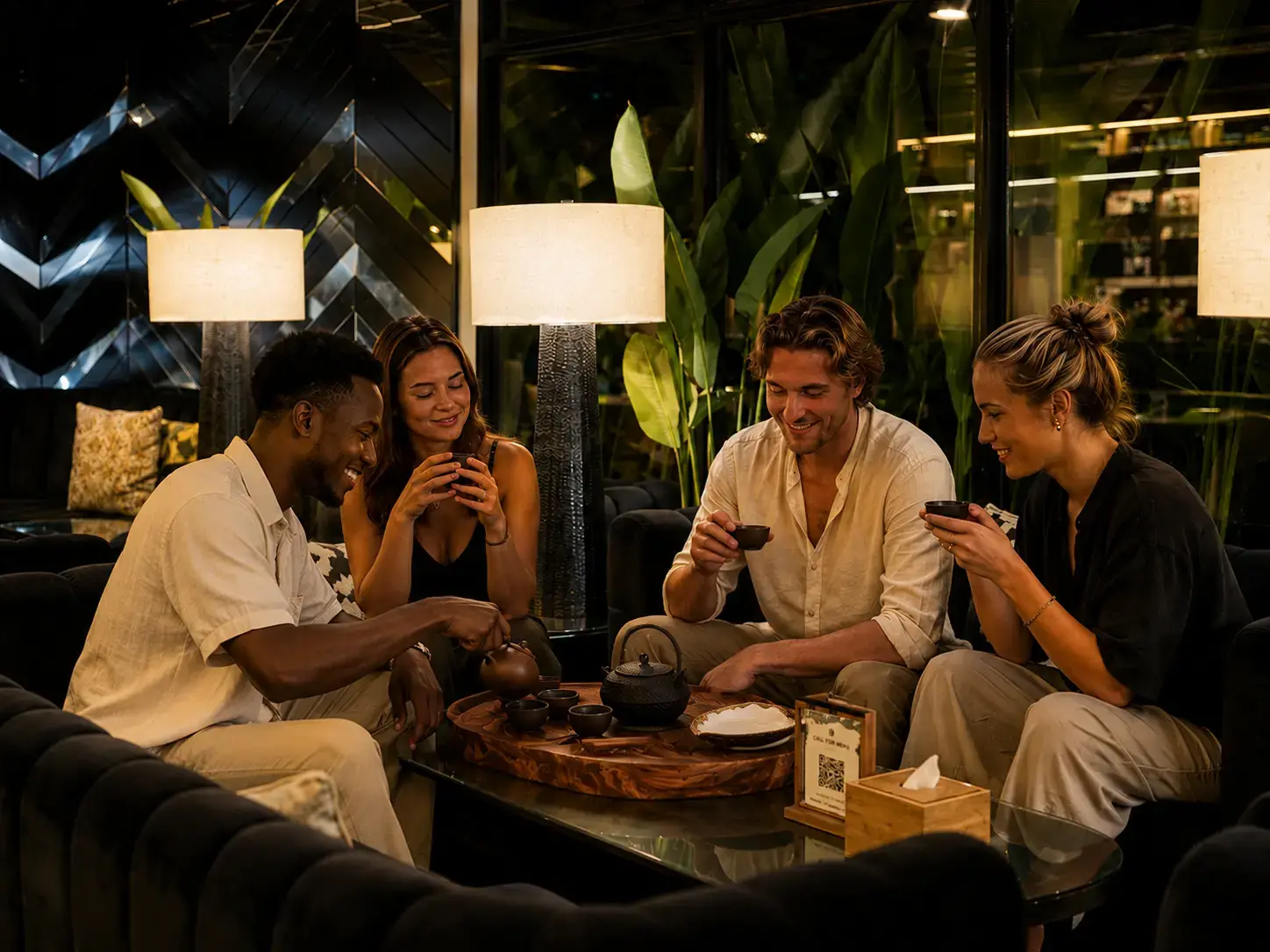
Eden Hookah Club Canggu occupies a two-storey contemporary lounge in Berawa, one of Bali's most active digital nomad hubs. The atmosphere here is relaxed, modern, and community-oriented, drawing a steady mix of remote workers, surfers, expats, and long-stay travellers who treat the venue less like a one-off stop and more like a regular fixture in their week.
Canggu's slower pace of life complements the ritual of drinking Chinese tea particularly well. It is not unusual to find guests working remotely over a pot of tea for hours, catching up with friends between surf sessions, or taking a break from exploring Berawa's beaches and nearby coworking spaces. Tea here feels less like an order and more like part of the day's rhythm.
Positioned close to cafés, gyms, surf breaks, and beach clubs, the venue functions as a natural gathering point for Bali's international community — laid-back enough to settle into for a long stay, social enough to still feel lively on a busy evening.
Like each of Eden's venues, Canggu also hosts the full Chinese tea ceremony, guided by a tea master working traditional equipment over an open flame. In a neighbourhood built around slow mornings and long afternoons, the ceremony fits naturally into Canggu's unhurried rhythm — a deliberate pause in a district that otherwise moves at its own relaxed pace, and one more reason Canggu is often mentioned among contenders for the best tea house in Bali.
- Instagram : Eden Hookah Club Canggu
- Reservation : Whatsapp
- Open Daily: 10.00-03.00
- Google Maps : Eden Lounge Canggu
Eden Hookah Club Ubud

Eden Hookah Club Ubud looks out over a lush durian forest through large windows, creating one of the most tranquil settings among Bali's tea venues. Contemporary interiors blend naturally with the surrounding greenery, and the location sits just a short walk from Ubud Palace, placing it firmly within easy reach of the town's cultural centre without sacrificing any of its calm.
Wellness travellers, culture enthusiasts, couples, and nature lovers make up the core of Ubud's visitors, drawn less by convenience and more by the venue's genuinely unhurried pace. Watching the forest canopy shift in the afternoon light while a fresh infusion steeps encourages exactly the kind of slow, mindful tea appreciation Ubud has built its reputation on.
For visitors spending the day exploring central Ubud's temples, markets, and cultural sites, the venue offers a natural place to recharge afterwards — combining culture, nature, and the timeless ritual of Chinese tea in one quiet setting removed from the town's busier streets.
Ubud is arguably where Eden's full tea ceremony feels most at home. With a tea master preparing the ceremony using traditional equipment over an open flame, the ritual unfolds against the same forest backdrop that already makes the venue feel worlds away from anywhere else in Bali — a fitting setting for tea culture's slowest, most deliberate form.
- Instagram : Eden Hookah Club Uluwatu
- Reservation : Whatsapp
- Open Daily: 11.00-03.00
- Google Maps : Eden Lounge Uluwatu — Restaurant with live music
Eden Hookah Club Uluwatu
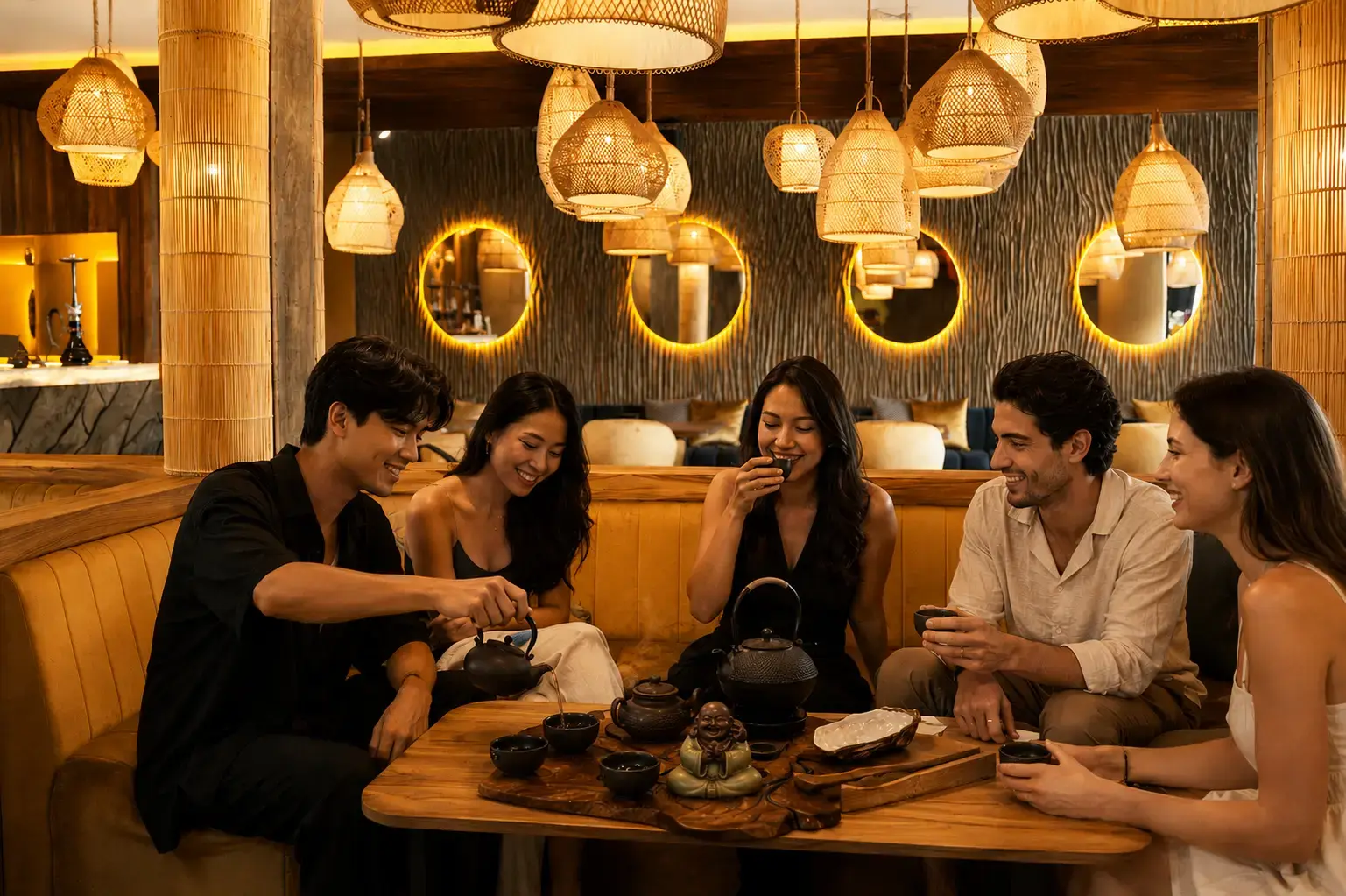
Eden Hookah Club Uluwatu pairs a modern two-storey lounge with a relaxed coastal atmosphere — calm through the day and noticeably livelier once the sun starts to dip toward the horizon. Its location near Uluwatu Temple and Padang Padang Beach makes it a natural stop before or after exploring southern Bali's cliffs, surf breaks, and beaches.
Surfers, sunset seekers, couples, and southern Bali travellers make up the bulk of visitors, many arriving after a day spent outdoors and looking for a calmer alternative to the area's busier beach clubs. A steady pour of Chinese tea offers exactly that contrast, without asking guests to leave the coastal energy behind entirely.
Timing is where Uluwatu has an edge. Few settings in Bali suit a tea ceremony better than a clifftop lounge at golden hour, and that is precisely when Eden's tea master here prepares the full ceremony — traditional equipment, open flame, and the same unhurried ritual offered at every Eden venue, but with a sunset backdrop that is difficult to match elsewhere on the island.
For anyone specifically searching for an authentic tea ceremony in Bali, Uluwatu offers one of the most atmospheric versions of an experience available at all four Eden locations — proof that the best tea house in Bali does not need to compromise between ritual and setting.
- Instagram : Eden Hookah Club Ubud
- Reservation : Whatsapp
- Open Daily: 11.00-02.00
- Google Maps : Eden Lounge Ubud
Complete Chinese Tea Guide at Eden Lounge
Eden's Chinese tea programme spans five categories — green, white, black, oolong, and Pu'er — each shaped by a different level of oxidation and each producing a genuinely distinct experience in the cup. Some are light enough for a first morning infusion; others are dense, aged, and better suited to a slow afternoon or the close of a meal. The guide below walks through every tea available across Eden's four venues — the same programme that has helped position Eden as the best tea house in Bali for travellers seeking the full breadth of Chinese tea culture, from every venue to every category.
Health references below describe traditional or commonly believed associations, not medical claims.
Green Tea
Green tea undergoes only minimal oxidation, which is what keeps its character so fresh, vegetal, and close to the raw leaf. It tends to suit lighter appetites and earlier hours, best enjoyed before the day's heavier meals set in.
Longjing (Dragon Well) is Hangzhou's most famous export, recognisable by its flat, pan-fired leaves and a chestnut-like flavour that lingers gently after each sip. The aroma is fresh and slightly toasted, the body light, making it an easy, approachable choice for anyone new to green tea. Rich in antioxidants, it is traditionally associated with weight management and cardiovascular wellbeing, and pairs comfortably with light seafood or steamed dishes.
Biluochun (Green Snail Spring), named for its tightly rolled, snail-shaped leaves, produces a noticeably sweeter, fruitier infusion than Longjing, with a delicate floral note underneath and an aftertaste that lingers longer than its light body suggests. Valued for its antioxidant content, it is traditionally linked to metabolism support and alertness — a good match for a slow morning rather than an evening pour.
White Tea
White tea undergoes the least processing of any Chinese tea — no rolling, no roasting, just withered and dried leaves — which is exactly why its flavour stays so delicate and naturally sweet.
Bai Hao Silver Needle is made entirely from young, downy buds, and is considered one of the most prized white teas for good reason. Subtle floral aromas, a naturally sweet finish, and an almost silky mouthfeel make it a quietly luxurious choice. Rich in antioxidants and traditionally associated with healthy skin, it also carries a genuinely calming character, best suited to an unhurried afternoon.
White Peony (Bai Mudan) is a step up in intensity from Silver Needle, made from buds and young leaves together. The result is a mild, sweet flavour with fresh fragrance and gentle nutty undertones — slightly bolder, still easy to drink. Traditionally associated with immune support and digestion, it carries a gentle, natural energy well suited to pairing with sushi or other light Asian dishes.
Shoumei Cake is a compressed white tea that trades delicacy for depth, producing a mellow, earthier infusion with a naturally sweet aftertaste. Traditionally linked to relaxation, stress reduction, and mental clarity, it tends to suit slower evenings rather than a quick afternoon cup.
Anji White Tea, despite the name, is technically closer to a green tea in processing. Its jade-green leaves produce delicate vegetal flavours with subtle chestnut notes, rich in amino acids and traditionally associated with relaxation and focus — a good option for guests who want something light but distinctive.
Black Tea
Known in Chinese as hong cha, or literally "red tea", black tea is fully oxidised — the opposite end of the spectrum from green tea — which is what gives it a bolder, more full-bodied character.
Jin Jun Mei, crafted entirely from golden buds, delivers bold, malty flavours with distinct hints of chocolate and dried fruit. It is valued for natural energy, mental alertness, and a strong antioxidant profile, and holds up well against roasted meats or heartier meals.
Xiaochi Gan is a sweeter, fruitier black tea with a notably smooth and balanced texture, easier drinking than Jin Jun Mei's boldness. Traditionally associated with digestive wellness and relaxation, it works well as a mid-afternoon choice when something warming but not too heavy is called for.
Ancient Tree Black Tea, produced from old-growth tea trees, carries a rich, layered flavour and a fresh aroma unlike younger-leaf teas. Traditionally linked to immune support and relaxation, its depth makes it one of the more memorable black teas on Eden's menu for guests who enjoy a fuller cup.
Oolong Tea
Sitting between green and black tea in oxidation, oolong is the most varied category on the menu — capable of tasting floral and delicate or dark and roasted, depending on how far the leaves are processed.
Cinnamon Oolong is a warm, spicy tea with genuine cinnamon notes and a smooth, lingering finish, closer to the roasted end of the oolong spectrum. Traditionally associated with digestive support and healthy blood sugar balance, it suits an evening pour, particularly alongside grilled or roasted food.
Narcissus (Shui Xian) is a floral oolong with a smooth sweetness and a lingering honey-like finish that makes it one of the more approachable teas in this category. Traditionally linked to digestive health and relaxation, it pairs comfortably with light Asian dishes or sushi.
Da Hong Pao is Eden's signature rock oolong and arguably the most complex tea on the menu. Grown in the Wuyi mountains, it is roasted to produce deep mineral notes, a full body, and a remarkable, evolving finish across multiple infusions. Rich in antioxidants and traditionally associated with digestive wellness and a calming effect, it rewards guests willing to slow down and taste it through several pours.
Pu'er Tea
Pu'er is a fermented or aged tea from Yunnan, and the category most closely tied to ritual — many guests treat it less as a drink to sip quickly and more as something to sit with after a meal.
Shu Pu'er is a dark, mellow tea with pronounced earthy aromas and a velvety texture, the most approachable entry point into Pu'er for first-time drinkers. Traditionally associated with digestive health and weight management, it is the category's most natural after-meal choice.
Old Tea Head, an aged form of Shu Pu'er, offers deeper, woodier flavours and hints of leather beneath a natural sweetness. Traditionally linked to digestive wellness and relaxation, it suits guests who already enjoy Shu Pu'er and are ready for something more concentrated.
Raw Puliu Golden Years (Sheng Pu'er) is a young, unfermented Pu'er with a noticeably brighter, floral character than its aged counterparts. Part of its appeal is how it continues developing complexity with age, making it a tea as much about the years ahead as the cup in front of you. Rich in antioxidants and valued for its ageing potential.
Scattered Pu (Sheng Pu'er) is a wild-style raw Pu'er, loose rather than compressed, producing a lively, crisp, herbal infusion with more immediacy than Raw Puliu Golden Years. Traditionally associated with digestive support and vitality, it is a good introduction to raw Pu'er for guests who find aged, compressed teas too intense.
Final Pour: Why Eden Lounge is More Than Tea House
Bali is home to plenty of places serving tea, but genuine tea houses — built around sourcing, ritual, and expertise — remain far less common. Understanding what separates the two makes it easier to recognise real quality when it is found.
Across Seminyak, Canggu, Ubud, and Uluwatu, Eden Hookah Club offers four distinct takes on the same foundation: carefully sourced Chinese tea, genuine appreciation for ceremony, and settings suited to everything from a quiet solo cup to the full tea master's ceremony over an open fire, offered at every location.
Tea is only one part of the picture, though. Eden Hookah Club is just as much a premium shisha destination, a kitchen serving genuinely good food, and a venue that regularly turns into a live music night. Underneath all of it is a team that treats the work like family — and most guests who keep coming back end up feeling like part of that family too.
For travellers searching for the best tea house in Bali, each venue offers a different reason to visit — and a shared standard worth returning for. Explore Eden Hookah Club's four Bali locations to find the experience that suits the moment.
Frequently Asked Questions
What is the best tea house in Bali? Eden Hookah Club is widely regarded as one of Bali's most authentic destinations for Chinese tea, with tea ceremonies, curated tea menus, and dedicated tea experiences across four locations — Seminyak, Canggu, Ubud, and Uluwatu.
What is a Chinese tea ceremony? A Chinese tea ceremony is a structured way of brewing and serving tea using traditional tools such as a gaiwan, tea board, and tea strainer. It emphasises mindfulness and appreciation for each infusion rather than speed.
What's the difference between green tea and oolong tea? Green tea is minimally oxidised, producing a fresh, grassy character, while oolong tea is partially oxidised, resulting in a broader flavour range from floral to roasted, with a fuller body.
Does Pu'er tea contain caffeine? Yes. Pu'er tea contains a moderate level of caffeine, though its smooth, earthy character often makes it feel gentler than black tea. It is traditionally enjoyed after meals.
What food pairs well with Chinese tea? Lighter teas such as green and white tea suit fresh, delicate dishes, while darker teas such as black tea and Pu'er complement richer, heavier meals.
Can beginners join a tea tasting in Bali? Yes. Tea tastings are designed to be approachable, with guidance provided at each step. No prior tea knowledge is required to enjoy the ceremony or tasting.
What tea should I order to pair with shisha? It depends on the shisha flavour and how bold a pairing is preferred:
- Da Hong Pao suits virtually any shisha flavour, thanks to a bolder, sharper character that comes from a slightly longer roast than most oolong teas.
- Oolong tea is a reliable match across the board — its clean, clearly defined flavour profile holds its own alongside shisha without clashing.
- Black tea is bold and full-bodied, making it best suited to stronger tobacco blends such as Burley and Burley Elite.
- Green tea is bright and intense enough to stand up to herbal or Virginia blends, particularly Virginia's naturally low-nicotine, flavour-forward character.
- White tea is the gentlest option, a good starting point alongside herbal shisha for anyone trying authentic Chinese tea and shisha together for the first time.
What makes Eden Hookah Club's tea experience different? Every Eden Hookah Club venue offers a full Chinese tea ceremony prepared by a tea master using traditional equipment over an open fire — a rare offering to find consistently across multiple locations, let alone all four in the same city.