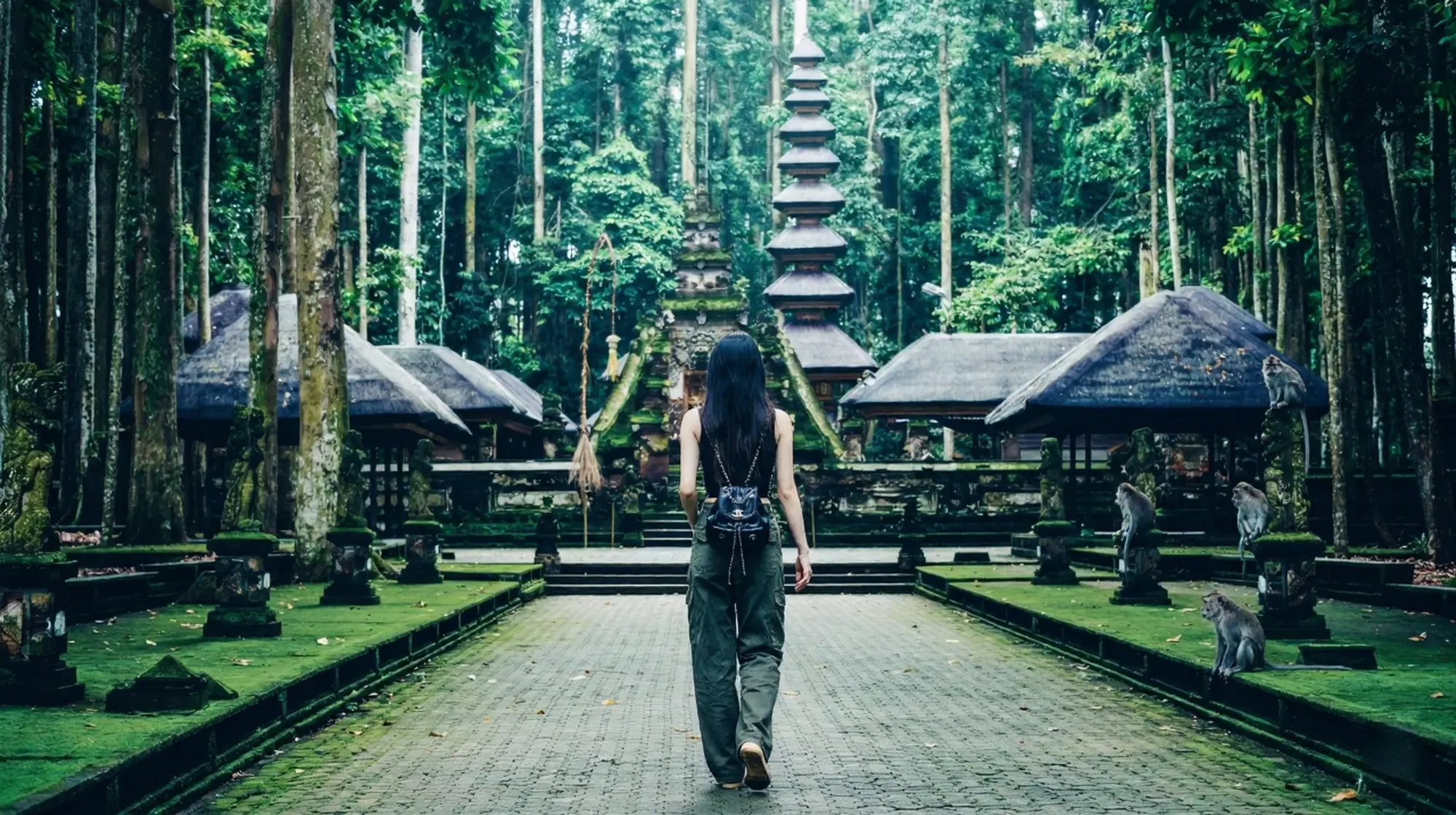
If there's one place in Bali that truly blurs the line between a wildlife encounter, a cultural experience, and an ancient temple visit — it's the Monkey Forest Ubud. And yes, it's exactly as wild (and as magical) as it sounds.
Officially called the Mandala Suci Wenara Wana — or the Sacred Monkey Forest Sanctuary — this lush 12.5-hectare jungle sits right in the heart of Ubud, flanked by art galleries, warungs, and rice terraces. More than 1,260 long-tailed macaques (Macaca fascicularis) live freely here alongside three ancient Hindu temples dating back to the 14th century.
Whether you're a first-timer trying to figure out if it's worth the visit (it is), or a returning traveler wanting the latest 2026 update on ticket prices and rules — this guide has everything you need.
Table of Content
What Is the Monkey Forest Ubud, Exactly?
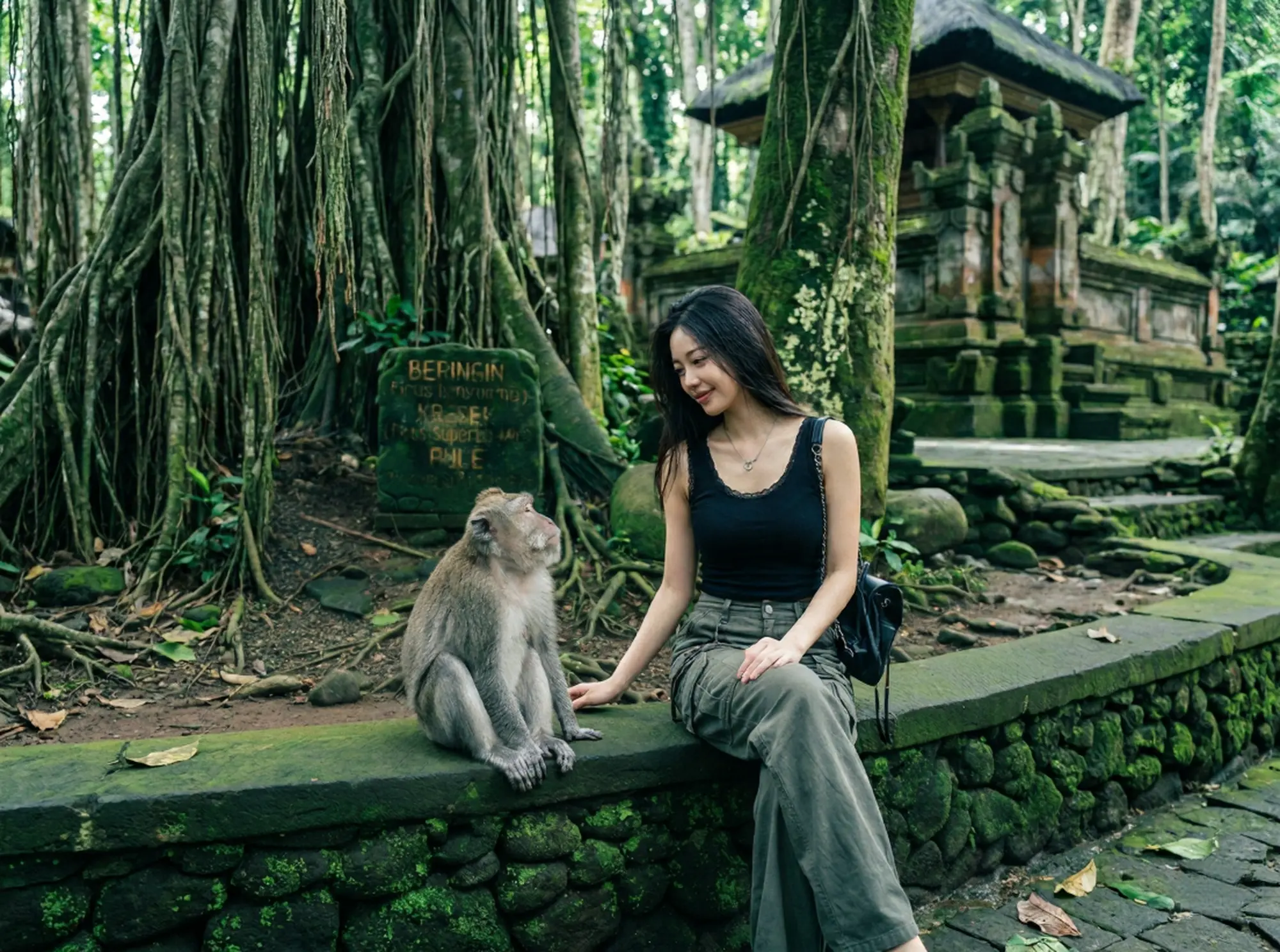
Think of it as a living, breathing sanctuary — part nature reserve, part Hindu temple complex, and part conservation site. The Monkey Forest isn't just a tourist attraction. It holds deep spiritual significance for the local Balinese community, particularly the village of Padangtegal, which manages and maintains the forest.
The Balinese believe in Tri Hita Karana — a philosophy of maintaining harmony between humans, nature, and the divine. The Monkey Forest is one of the most tangible expressions of this belief you'll find on the island.
Inside, you'll find:
- Over 1,260 long-tailed macaques roaming completely free
- 186 species of trees providing dense, shaded canopy
- Three sacred temples, all dating back to the 14th century
- Ancient stone carvings, moss-covered statues, and jungle bridges
- A natural spring temple used for purification rituals
2026 Entrance Fees — Updated April 1, 2026
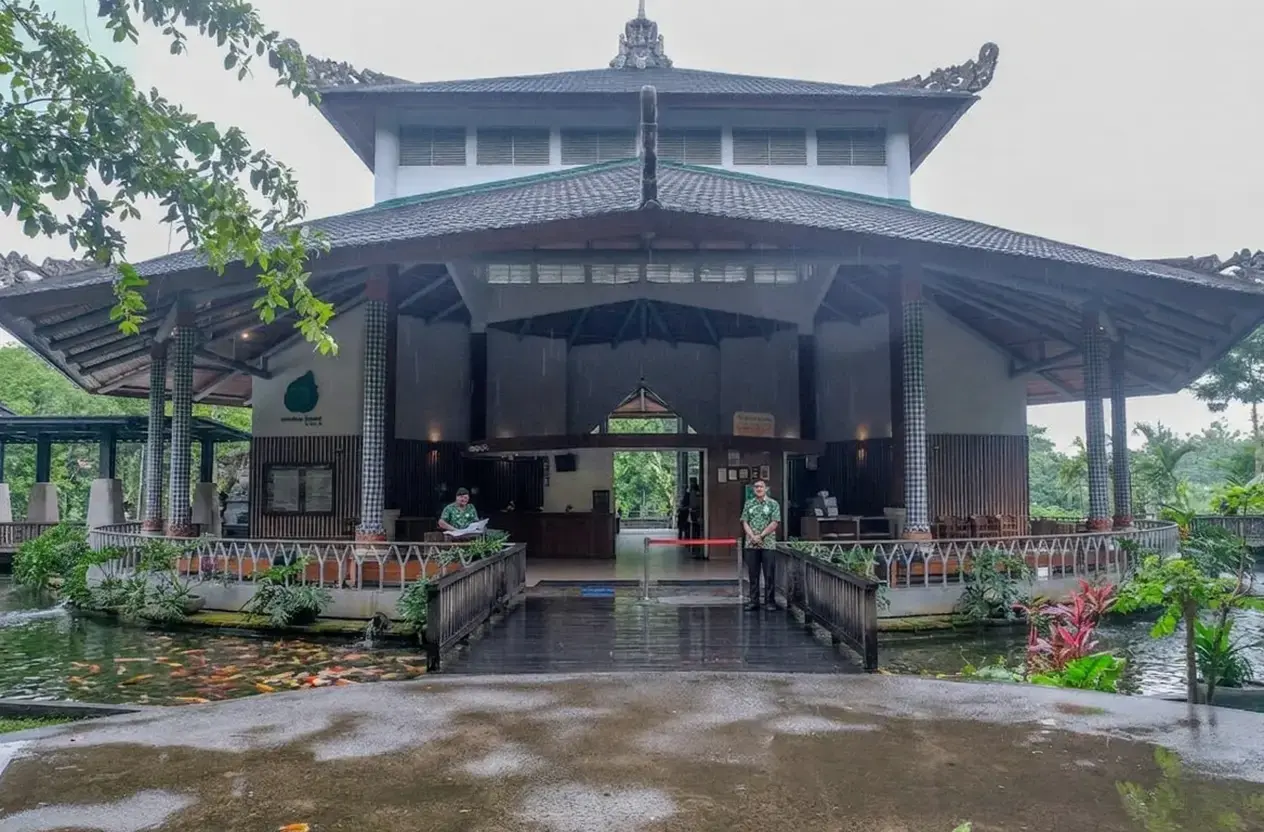
Here's the big news if you've been checking older articles: starting April 1, 2026, the Monkey Forest Ubud has officially increased its entrance fees. If you've been using outdated info floating around online, make sure you budget accordingly.
Foreign Visitors
Indonesian Citizens
According to the park administration, the fee increase is driven by rising maintenance costs. The additional revenue will go directly toward forest conservation programs and supporting the health and welfare of the macaques — including regular veterinary check-ups and habitat maintenance.
Tickets are valid only on the day of purchase. You can buy them at the official booth at the Sentral Parking entrance. No advance booking is required, though during peak season (July–August and December), expect queues in the morning
Opening Hours
The forest doesn't close for rain (and Ubud gets a lot of it), so don't worry about weather cancellations. That said, the paths can get slippery after heavy rain — closed-toe shoes are a smart call.
Best Time to Visit Monkey Forest Ubud
Timing your visit can make a surprisingly big difference to the overall experience. Here's the honest breakdown:
Early Morning (09:00–10:30 AM) — The Sweet Spot
This is hands-down the best time to visit. Tour groups haven't arrived yet, the monkeys are calmer and more curious than aggressive, and the forest feels genuinely atmospheric. The morning mist through the banyan trees is something else.
Late Afternoon (16:00–17:00) — Runner Up
Crowds thin out as day-trippers leave. The golden light through the canopy looks incredible for photos. The downside: some monkeys retreat deeper into the forest by this time.
Avoid Midday (11:00–14:00)
This is when tour buses from Kuta and Seminyak arrive. The monkeys get restless with larger crowds, and the Ubud heat is at its peak. Not impossible, but definitely not ideal.
“Pro Tip: Feeding Schedule
Staff feed the monkeys three times a day — roughly 08:00, 12:00, and 15:00 WITA. Visit around these feeding times if you want to see the monkeys at their most active and social. The troops converge and it's genuinely spectacular.”
Staff feed the monkeys three times a day — roughly 08:00, 12:00, and 15:00 WITA. Visit around these feeding times if you want to see the monkeys at their most active and social. The troops converge and it's genuinely spectacular.”
The Three Sacred Temples Inside Monkey Forest
Most visitors come for the monkeys — but the temples are honestly just as compelling. Don't rush through them.
1. Pura Dalem Agung Padangtegal (The Main Temple)
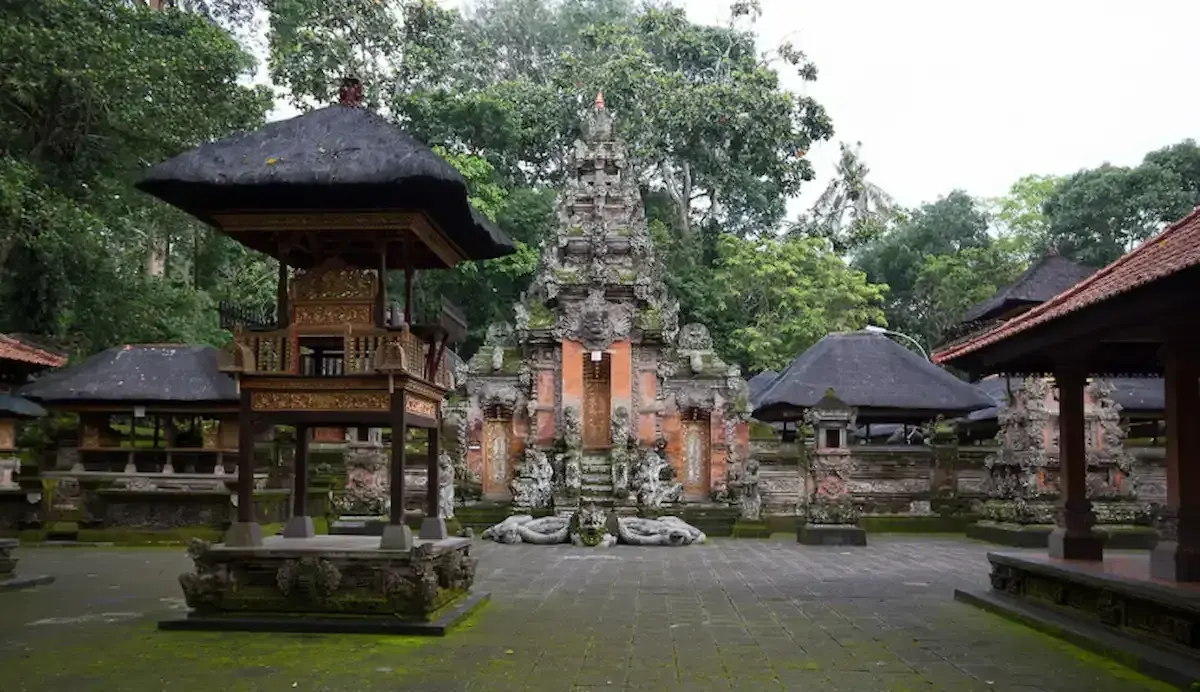
This is the spiritual heart of the sanctuary. Dedicated to Hyang Widhi in his manifestation as the God of Death and transformation, the temple features intricate stone carvings, carved demon faces (Bhoma) serving as guardian spirits, and moss-draped statues that look like they've grown straight out of the earth. It's still actively used by the Balinese Hindu community for ceremonies.
If the temple architecture here sparks your curiosity, you'll love exploring Ubud Palace — another stunning example of Balinese royal craftsmanship just a short walk away.
2. Beji Temple (The Holy Spring Temple)
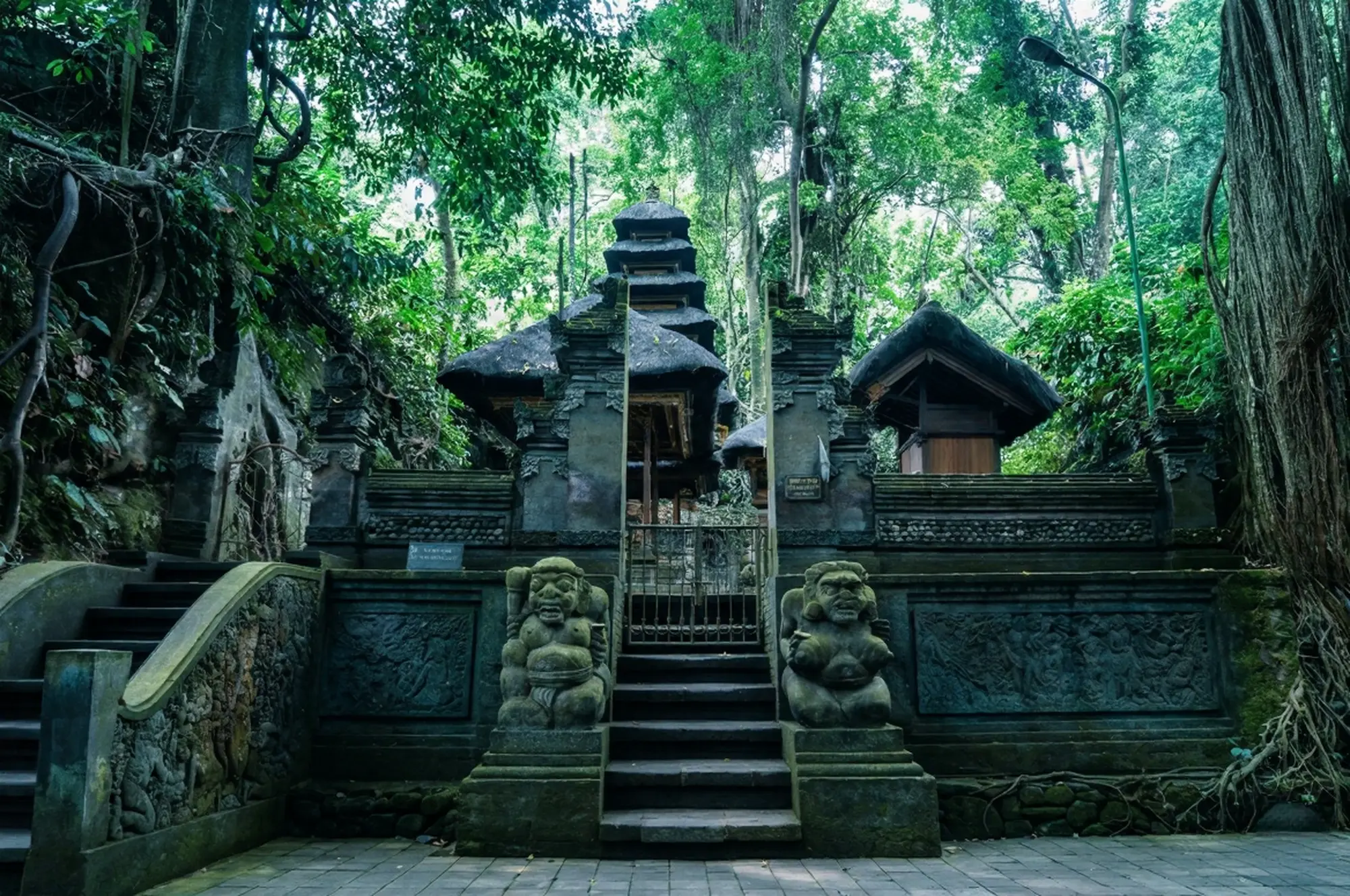
Tucked toward the northwest of the sanctuary, Beji is used for purification rituals — specifically a ceremony called Melukat, a spiritual and physical cleansing practice. The natural spring here is considered sacred. You probably won't see many tourists stop here, which makes it feel all the more special.
3. Prajapati Temple (The Cremation Temple)
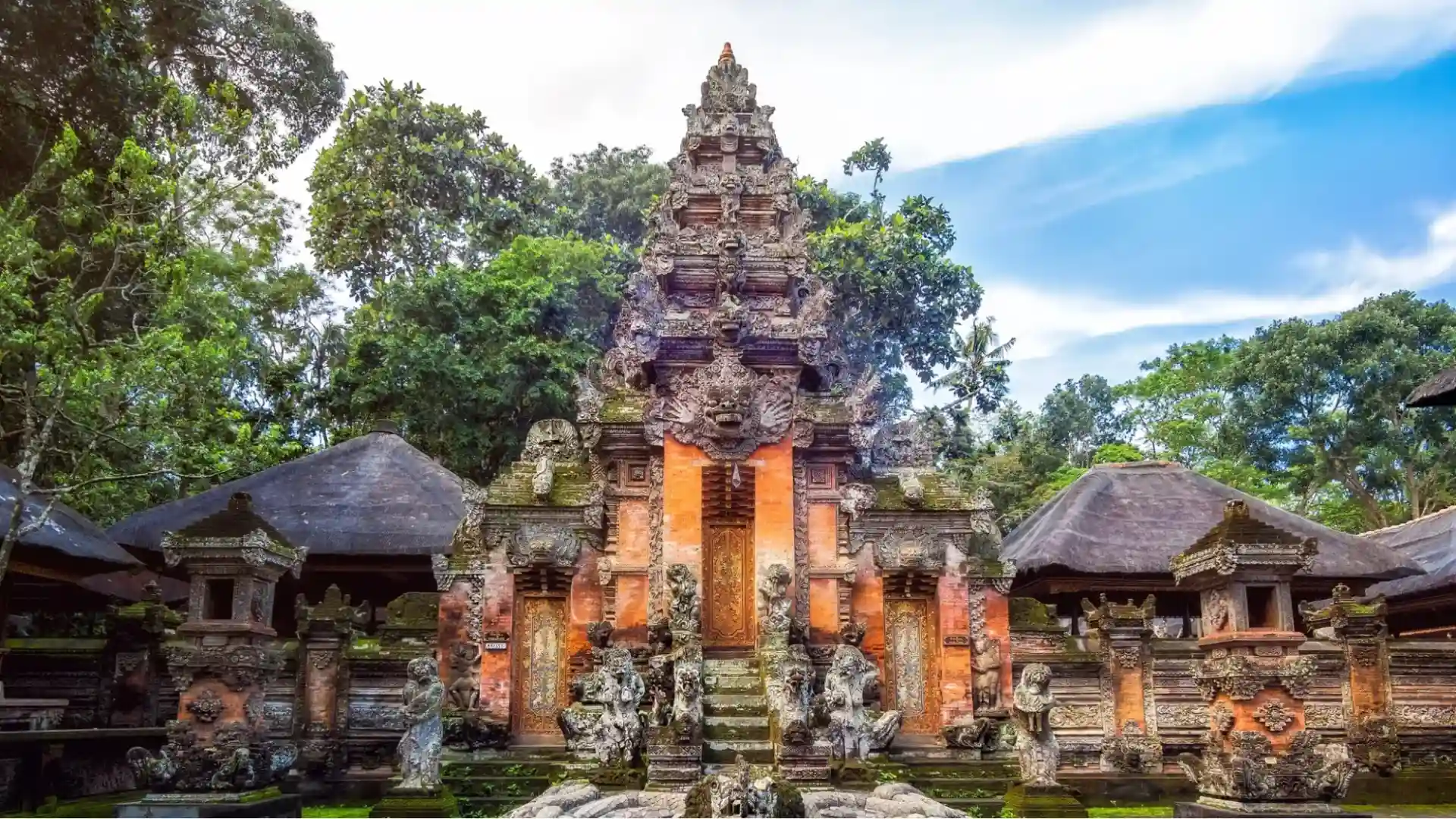
Located near the northeast, adjacent to the village cemetery, this temple is where Balinese Hindus worship Brahma Prajapati. The surrounding cemetery is used as a resting place between individual cremations and the mass cremation ceremony (Ngaben) held every five years.
“Note: While visitors cannot enter the inner temple sanctuaries, you can observe and photograph from outside respectfully. Please dress modestly — wrap-around sarongs are available to rent/borrow at the entrance.”
Monkey Safety: What You Actually Need to Know
Let's be real — the monkeys are the main event. And they're incredible. But they're also wild animals, and they can and will test you if you're not prepared. Follow these rules and you'll be absolutely fine.
The Don'ts (Non-Negotiable)
- Don't bring food, snacks, or drinks into the sanctuary — the monkeys will smell it and can become aggressive trying to get to it
- Don't wear sunglasses on your head, dangly earrings, or have a hat loosely on — they WILL take these and they won't give them back
- Don't stare directly into a monkey's eyes — in their world, that's a challenge
- Don't try to pick up or touch baby monkeys — the mother will react defensively and fast
- Don't feed the monkeys yourself, even if you see vendors outside selling bananas for that purpose
The Dos
- Keep your bag zipped and close to your body at all times
- Move slowly and calmly — panicking or running triggers a chase response
- If a monkey jumps on you, stay calm and wait — they usually jump off on their own
- Ask staff for help with monkey selfies — they know which monkeys are comfortable around people
- Wear closed-toe shoes with good grip, especially after rain
“About Rabies & Health Safety
There have been no recorded cases of rabies transmission from Ubud Monkey Forest macaques to human visitors. The monkeys are regularly monitored by vets and researchers in cooperation with Udayana University's Primate Research Center. If you are scratched or bitten, wash the wound thoroughly with soap and water immediately and seek advice from one of Ubud's clinics.”
There have been no recorded cases of rabies transmission from Ubud Monkey Forest macaques to human visitors. The monkeys are regularly monitored by vets and researchers in cooperation with Udayana University's Primate Research Center. If you are scratched or bitten, wash the wound thoroughly with soap and water immediately and seek advice from one of Ubud's clinics.”
How to Get to Monkey Forest Ubud
The Monkey Forest is located at Jalan Monkey Forest, Ubud — literally named after it, which tells you everything about how central it is. If you're staying anywhere in Ubud proper, there's a good chance you can walk there in 10–20 minutes.
Important: If you're driving or using a taxi, remember Ubud operates a one-way system on its main roads. The journey may take longer than Google Maps suggests.
What to Expect Inside: A Walk-Through
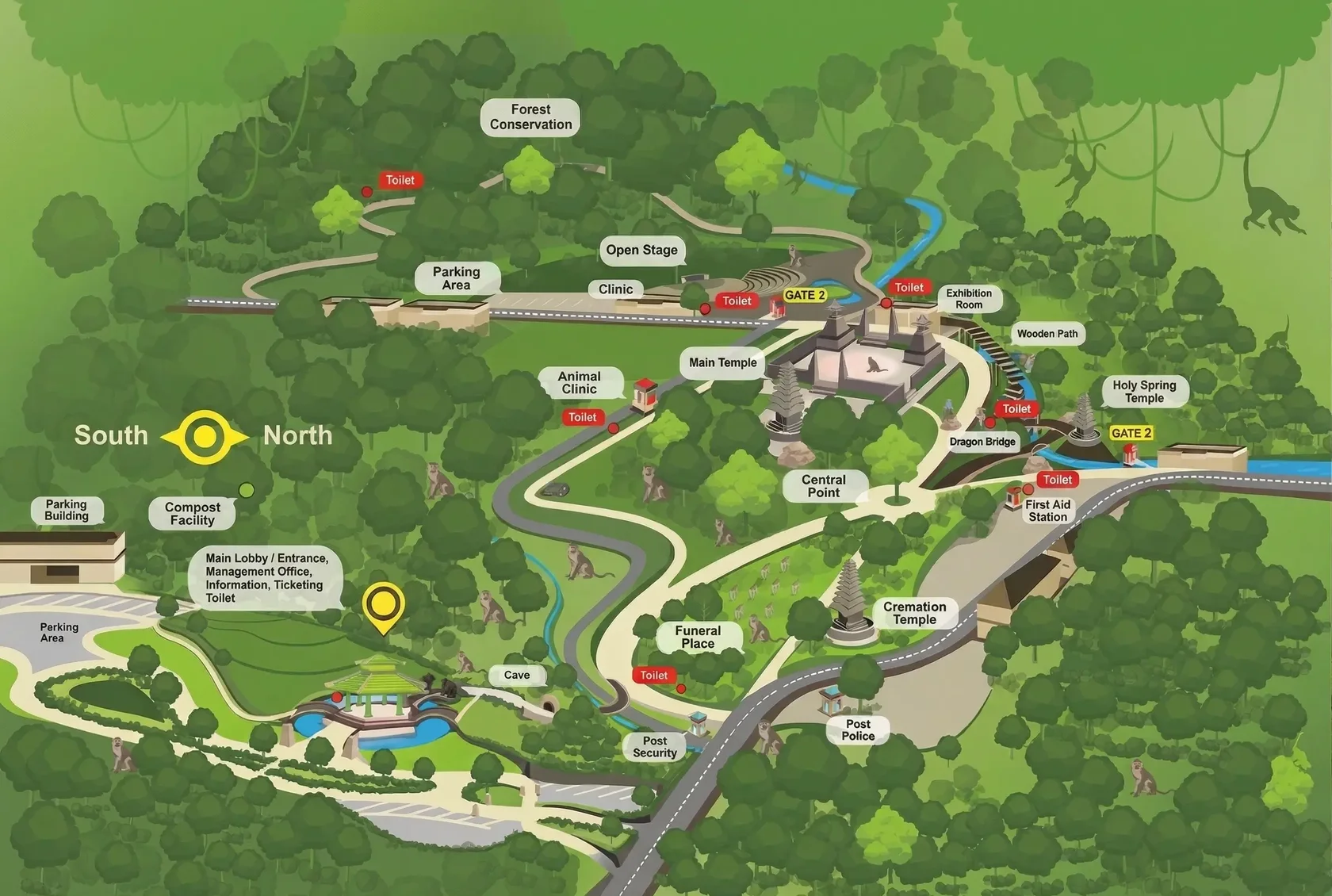
Most visitors spend between 60 and 90 minutes inside the sanctuary. Here's a rough flow of what a good visit looks like:
- Enter through Sentral Parking lobby, buy your ticket, and collect a map
- Walk the main shaded path south — this is where monkey density is highest
- Cross the stone bridge over the small gorge — great photo spot, monkeys love this area
- Loop around to visit the temple courtyards (observe from outside the inner sanctums)
- Circle back through the forest's quieter northern section near the Holy Spring Temple
- Exit back through the main entrance — there's a small cafe (Wenara Cafe) for drinks and snacks
The sanctuary also has a koi fish pond near the entrance, small gift shops, and souvenir stalls. Skip the banana sellers outside — feeding the monkeys is not permitted inside.
What to Do After Monkey Forest Ubud
The Monkey Forest sits at the southern end of Ubud's main strip, which makes it easy to pair with other activities on the same day. Planning your whole day in Ubud? Check out full guide on best things to do in Ubud to build the perfect itinerary.
- Ubud Art Market (Pasar Seni Ubud) — 15-minute walk north, great for batik, silver jewellery, and local crafts. It's free to enter and one of the best spots to pick up authentic Balinese souvenirs.
- Ubud Palace (Puri Saren Agung) — right in the center of town, free to enter during the day
- Campuhan Ridge Walk — a scenic 9km trail starting at the western edge of Ubud town
- Tegalalang Rice Terraces — 20 minutes north by taxi, Bali's most photographed rice paddies
- Goa Gajah (Elephant Cave) — 30 minutes east, a 9th-century archaeological site
Done with the Monkeys? You Deserve a Proper Wind-Down
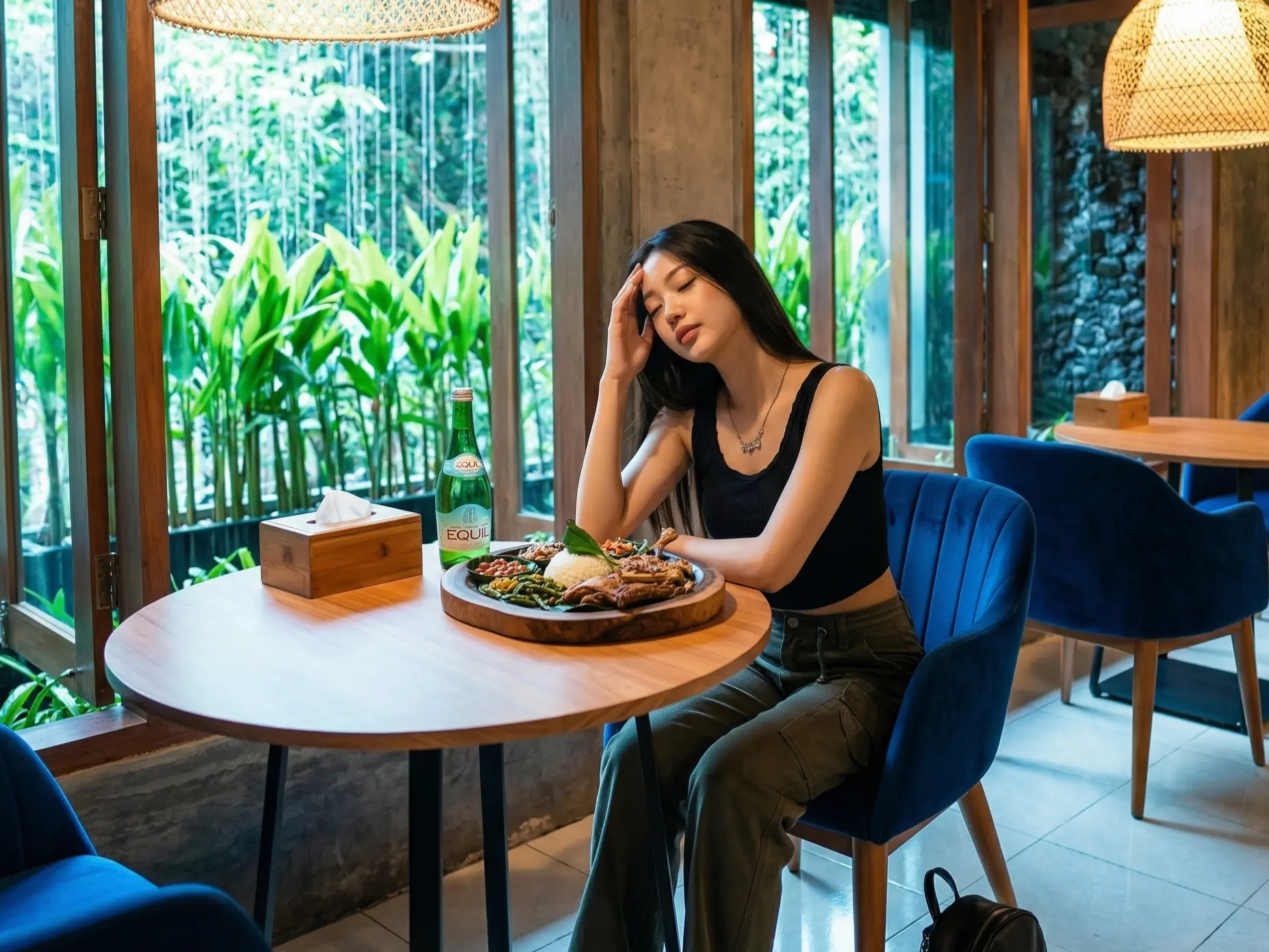
After a morning dodging curious macaques and exploring centuries old temples in the jungle heat, there’s really only one thing that makes sense: find a good spot to sit down, breathe, and take it all in.
That’s exactly what Eden Hookah Club Ubud is for.
Just a short walk from the Monkey Forest, Eden Hookah Club Ubud is where Ubud’s laid-back energy meets great food, premium shisha, and a cozy atmosphere that makes you want to stay longer than planned. Whether you're celebrating an epic morning with the macaques, looking for a relaxed lunch spot, or just need a cold drink and a comfortable seat — Eden delivers.
- Premium shisha experience with high-quality flavors
- Western–Asian fusion menu, plus authentic Balinese dishes like bebek betutu and ayam betutu
- A chance to try the iconic kopi luwak in a relaxed setting
- Craft cocktails in a stylish, comfortable lounge
- Central Ubud location — easy to reach after visiting the Monkey Forest
- Open daily with a warm, welcoming vibe for both locals and travelers
Take your time, unwind, and let Ubud slow down around you — this is the kind of place you’ll wish you found sooner.
Open: Daily 11:00 AM – 2:00 AM
Instagram: Eden Hookah Club Ubud
Reservation: Whatsapp
Google Maps: Eden Lounge Ubud
Instagram: Eden Hookah Club Ubud
Reservation: Whatsapp
Google Maps: Eden Lounge Ubud
Frequently Asked Questions
Is Monkey Forest Ubud worth it?
Yes — genuinely. It's one of the few tourist attractions in Bali that combines wildlife, architecture, spirituality, and nature in a single compact space. Even if you're not a 'wildlife person,' the temples and forest alone are worth the entrance fee.
Can children visit Monkey Forest Ubud?
Absolutely. Kids aged 3–12 get a discounted ticket. Children under 3 enter free. That said, supervise young children closely — the monkeys can be unpredictable and will go for snacks or shiny objects without warning.
Do I need to book in advance?
No advance booking is needed. Simply show up at the Sentral Parking entrance and buy your ticket at the official booth. During peak season (July–August, Christmas–New Year), consider arriving right at opening to beat the crowds.
How long should I spend at Monkey Forest Ubud?
Plan for 60–90 minutes. That's enough time to walk all the main paths, visit the temples, and have a proper encounter with the macaques without feeling rushed.
Are pets allowed?
No. Pets are not permitted inside the sanctuary.
Is there parking at Monkey Forest?
Yes. Sentral Parking is located at the entrance. Expect a small parking fee. However, if you're staying in Ubud proper, walking is the easiest option.